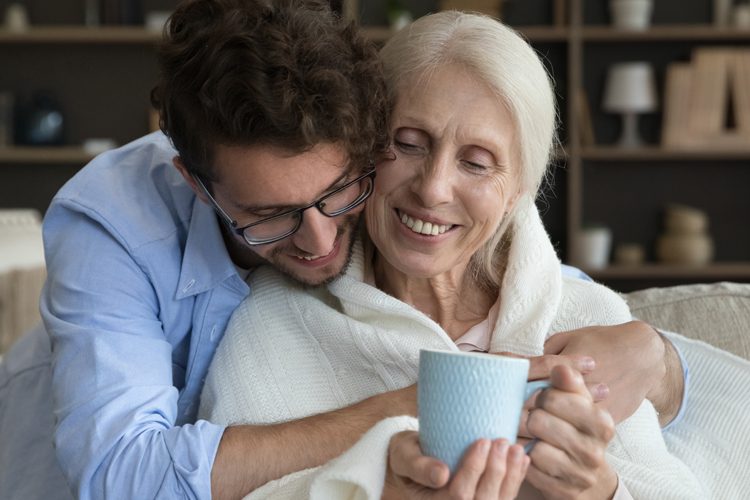
Senior empathy comes to life when we take a moment to truly experience the world from an older adult’s perspective.
When we think about quality senior care, we often focus on services, safety, and clinical support. But at the heart of truly meaningful care is something less tangible—and far more powerful: empathy.
For many older adults, daily life includes challenges that aren’t always visible. Simple tasks can become frustrating. Senses may change. Independence can feel just out of reach. And when those experiences are met with urgency instead of understanding, it can leave someone feeling rushed, overlooked, or disconnected. Empathy is what bridges that gap.
Walking In Their Shoes
Recently, I had the opportunity to participate in an “empathy experience” through our mentor program—an exercise designed to simulate some of the physical challenges older adults face every day.
My fingers were stiff, making it difficult to hold a pen. Writing something as simple as a letter felt unfamiliar and frustrating. My vision was limited, so walking across the room required caution and assistance. Even small tasks, like opening a drink or getting ready for the day, took more time and focus than I expected.
At one point, I dropped my drink. I felt embarrassed. Then came the pressure:
“Hurry up.”
“Finish quickly.”
I wasn’t done—but I felt like I didn’t have a choice.
Later, during a morning routine exercise, I was told to brush my teeth and wash my face within a set time. But with limited dexterity and blurred vision, even getting toothpaste onto the brush was a challenge. The more I was rushed, the more frustrated I became.
In those moments, I wasn’t just completing a task—I was experiencing what it feels like to lose control, to be hurried, and to feel misunderstood.
And it changed my perspective completely.
Why Senior Empathy Changes Everything
Experiences like this are a powerful reminder that empathy isn’t just a “nice-to-have” in senior care—it’s essential.
When caregivers take the time to understand what someone may be feeling, care becomes more than a checklist. It becomes a relationship.
- A moment of patience can preserve dignity.
- A simple explanation can reduce fear.
- Allowing someone extra time can restore a sense of independence.
Without empathy, even the best care can feel impersonal. But with it, everyday interactions become opportunities for connection, respect, and trust.
A New Way of Listening
The impact of this experience showed up for me almost immediately.
The very next day, a resident expressed frustration, saying, “I can’t see anything!” It was something I had heard before—but this time, I understood it differently. Instead of hearing a complaint, I heard a need.
That shift—from reacting to truly listening—is the power of empathy. It allows us to respond with intention and compassion, not just routine.
How We Put Senior Empathy Into Practice
At Dayspring Villa, empathy is more than an idea—it’s part of how we care for one another every day. Our approach is guided by the Eden Alternative, which focuses on creating a community where each person is valued, heard, and supported.
This means a resident-driven community:
- Residents set the pace of their day—from meals to morning routines
- Care is personalized, honoring individual preferences and needs
- Relationships matter, not just tasks
We believe that the opposite of loneliness isn’t simply being around others—it’s feeling a true sense of belonging. Being known. Being included. Being respected.
Experiences like empathy training help keep that commitment at the forefront. They remind us that every interaction—no matter how small—has the power to either uplift or diminish someone’s day.
Care That Starts with Understanding
At the end of the day, empathy is what transforms care into something deeply human.
It’s what helps us slow down, listen more closely, and see each person not just for the care they need—but for the life they’ve lived.
And that’s the kind of care every person deserves.